
A painful or damaged tooth does not always mean you need an extraction. In many cases, root canal treatment can remove infection from inside the tooth, protect the surrounding tissues, and allow your natural tooth to remain in place.
If you are experiencing persistent tooth pain, sensitivity, swelling, or discomfort when chewing, you may be wondering whether a root canal in Lewisville could help. The right treatment depends on the condition of your tooth and the findings of a professional dental examination.
For patients with an infected or severely damaged tooth that can still be restored, root canal therapy may provide a way to preserve natural tooth structure rather than removing it.
What Is Root Canal Treatment?
A root canal is a dental procedure used when the soft tissue, or pulp, inside a tooth becomes inflamed or infected. This can happen because of deep decay, cracks, trauma, or repeated dental procedures.
During treatment, the dentist removes the inflamed or infected pulp, cleans and disinfects the inside of the tooth, then fills and seals the root canals. The tooth is subsequently restored, often with a filling or crown depending on its condition.
According to the American Association of Endodontists, the goal of root canal treatment is to eliminate infection, prevent reinfection, and save the natural tooth.
Unlike extraction, root canal treatment allows the natural tooth to remain in your mouth and continue functioning.
How Can a Root Canal Save Your Natural Tooth?
Root canal therapy focuses on treating the problem inside the tooth while preserving the remaining healthy tooth structure.
The process generally involves:
- Examination and diagnosis – Your dentist evaluates your symptoms, examines the tooth, and may use dental imaging to determine the source and extent of the problem.
- Local anesthesia – The affected area is numbed to help keep you comfortable during treatment.
- Accessing the tooth – A small opening is made to reach the infected or inflamed pulp.
- Removing damaged pulp – The unhealthy tissue is carefully removed from inside the tooth.
- Cleaning and disinfecting – The root canals are cleaned and shaped to remove bacteria and infected material.
- Filling and sealing – The cleaned canals are filled and sealed to help prevent reinfection.
- Restoring the tooth – A filling or dental crown may be recommended to restore strength and function.
The AAE explains that after endodontic treatment, a properly restored tooth can continue to function like a natural tooth.
Preserve Your Natural Tooth When Possible
Your natural tooth plays an important role in chewing, appearance, and maintaining the position of surrounding teeth. When a tooth is clinically and structurally restorable, preserving it may avoid the additional treatment associated with replacing an extracted tooth.
If persistent tooth pain or sensitivity is interfering with your daily life, consider having the tooth evaluated rather than assuming extraction is your only option. Contact Hillcrest Dental to discuss your symptoms and determine whether root canal treatment may be appropriate.
Signs You May Need a Root Canal
Not every toothache requires a root canal. However, certain symptoms can indicate that the pulp inside a tooth may be damaged or infected.
Potential signs include:
- Persistent or severe toothache
- Sensitivity to hot or cold that lingers
- Pain when biting or chewing
- Swelling around a tooth
- Tender or swollen gums
- Tooth discoloration or darkening
- A recurring pimple or drainage near the gums
- Signs of a dental abscess
- Pain or pressure around a previously damaged tooth
The AAE notes that symptoms can include lingering hot or cold sensitivity, severe pain with chewing, swollen or tender gums, pimples on the gums, and tooth discoloration.
However, symptoms can overlap with other dental conditions. Only a dental examination can determine whether you actually need a root canal.
Experiencing ongoing tooth pain, sensitivity, or swelling? Don’t wait for the problem to become more difficult to treat. Schedule a dental evaluation with Hillcrest Dental in Lewisville, TX, so your tooth can be properly assessed.
What Causes a Tooth to Need Root Canal Treatment?
Several problems can damage the pulp and potentially lead to infection.
Common causes include:
Deep Tooth Decay
When decay progresses deep into a tooth, bacteria can eventually reach the pulp. At this stage, a routine filling may no longer be enough.
Cracks or Fractures
A cracked or fractured tooth can allow bacteria to enter areas that are difficult to clean, potentially affecting the pulp.
Dental Trauma
An injury can damage the pulp even when there is no obvious crack or visible damage.
Repeated Dental Procedures
A tooth that has undergone multiple procedures may experience pulp irritation or damage.
Untreated Cavities
Leaving a cavity untreated can allow decay to progress deeper into the tooth.
The AAE identifies deep decay, repeated dental procedures, faulty crowns, cracks or chips, and dental trauma among reasons a tooth may require root canal treatment.
Root Canal vs. Tooth Extraction: Which Is Better?
The answer depends on the individual tooth.
If a tooth has sufficient healthy structure and can be predictably restored, your dentist may recommend treatment designed to preserve it. If the tooth is too damaged to restore or has another condition that prevents successful treatment, extraction may be considered.
Root Canal Treatment
Potential advantages include:
- Preserving your natural tooth
- Maintaining normal chewing function
- Helping maintain the position of surrounding teeth
- Preserving the natural appearance of your smile
- Avoiding extraction when the tooth can be successfully restored
Tooth Extraction
Extraction removes the damaged tooth but may create a need for replacement. Depending on the situation, replacement options can include a dental implant, bridge, or removable prosthesis.
A missing tooth can affect chewing and allow neighboring teeth to shift. Replacement can also involve additional appointments and procedures.
Root canal treatment is not automatically the right choice for every tooth. Your dentist should evaluate the tooth’s condition, restorability, infection, and overall prognosis before recommending treatment.
Is Root Canal Treatment Painful?
Fear of pain is one of the most common concerns patients have about root canals.
Modern root canal treatment is performed using local anesthesia to numb the affected area. During the procedure, you should not expect to feel the sharp pain associated with an untreated inflamed or infected tooth, although you may experience pressure or other sensations.
Some soreness or sensitivity can occur after treatment, particularly during the first few days. The AAE notes that modern anesthesia and techniques generally allow patients to remain comfortable during treatment, while temporary discomfort may occur afterward.
In many cases, treating the source of the infection can help resolve the pain associated with the affected tooth.
How Long Does a Root Canal Take?
Treatment time varies from patient to patient.
Factors that can influence the appointment include:
- Location of the tooth
- Number and shape of the root canals
- Severity of infection
- Complexity of the tooth
- Whether additional treatment is required
- Whether the tooth needs a crown or other restoration
Some root canal procedures can be completed in one appointment, while others may require additional visits. Your dentist can explain the expected treatment plan after examining your tooth.
What Happens After a Root Canal?
After root canal treatment, your tooth may feel sensitive or sore for a short period.
Your dentist may recommend that you:
- Follow post-treatment instructions carefully
- Avoid chewing hard foods on the treated tooth until it is adequately restored
- Maintain regular brushing and flossing
- Attend recommended follow-up appointments
- Complete the final restoration if a crown or other restoration is recommended
Restoring the tooth is particularly important because a root canal-treated tooth may need additional protection depending on how much natural structure remains.
Contact your dentist if pain becomes severe, swelling develops or increases, your bite feels significantly uneven, or you experience other concerning symptoms after treatment.
Want to keep your natural tooth whenever possible? Hillcrest Dental can evaluate your tooth and explain whether root canal treatment is an appropriate option. Contact the Lewisville dental team to arrange an evaluation.
How Much Does Root Canal Treatment Cost in Lewisville, TX?
The cost of a root canal varies because every tooth and treatment plan is different.
Factors that may affect root canal cost include:
- Which tooth requires treatment
- Number and complexity of the canals
- Extent of infection or damage
- Diagnostic imaging requirements
- Additional dental procedures
- Whether a crown or other restoration is needed
- Dental insurance coverage
- Available payment or financing options
Because of these variables, it would be misleading to quote one price for every patient.
If you are researching root canals treatment in Lewisville, Hillcrest Dental can evaluate your tooth and provide treatment recommendations and an individualized estimate based on your needs.
Why Saving Your Natural Tooth Matters
When a tooth can be predictably restored, preserving it can offer several advantages.
Your natural tooth helps provide:
- Efficient chewing
- Natural biting and sensation
- A natural-looking smile
- Stability for neighboring teeth
- Continued function without immediate extraction and replacement
The AAE emphasizes that natural teeth provide advantages in chewing, appearance, and function, and that endodontic treatment can help patients retain their natural teeth.
That does not mean every damaged tooth should receive a root canal. The best approach depends on the tooth’s condition and your individual dental needs.
When Should You See a Dentist?
Persistent tooth pain should not simply be ignored.
Schedule a dental evaluation if you experience:
- Tooth pain that persists or worsens
- Lingering sensitivity to hot or cold
- Pain while biting
- Swelling around a tooth or gum
- A possible tooth abscess
- Tooth trauma
- A cracked or broken tooth
- Unexplained tooth discoloration
Dental infections can progress if left untreated. The American Dental Association recommends definitive dental treatment for several conditions involving pulpal or periapical pain and infection rather than relying on antibiotics alone in otherwise healthy adults.
When Is It a Dental Emergency?
Seek urgent medical or emergency care if you develop significant facial swelling, difficulty breathing or swallowing, or other severe symptoms, particularly if an infection appears to be spreading.
These symptoms can indicate a potentially serious infection and should not be managed solely at home.
Root Canals in Lewisville, TX
If you are searching for root canal in Lewisville, choosing a dental practice that can evaluate the cause of your symptoms is an important first step.
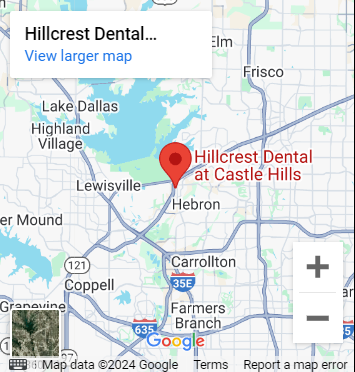
At Hillcrest Dental, patients in Lewisville, TX, can seek professional evaluation for tooth pain, sensitivity, damaged teeth, and other symptoms that may require restorative or endodontic treatment.
Whether you are researching root canals Lewisville options because of persistent pain or have already been told that you may need treatment, an examination can help determine the most appropriate next step.
If root canal therapy is appropriate, treatment is intended to address the problem inside the tooth while preserving the natural tooth whenever it can be successfully restored.
FAQs
1. How do I know if I need a root canal?
Persistent tooth pain, lingering hot or cold sensitivity, pain when chewing, swelling, or signs of an abscess may indicate a problem with the tooth’s pulp. However, these symptoms can have several causes. A dental examination is needed to determine whether root canal treatment is appropriate.
2. Can a root canal save my natural tooth?
Yes, when the tooth is sufficiently healthy and structurally restorable, root canal treatment can remove infected or inflamed pulp, clean and seal the canals, and allow the tooth to remain in place.
3. Is root canal treatment painful?
Modern local anesthesia is used to keep patients comfortable during treatment. Some soreness or sensitivity may occur afterward, but treating the underlying problem can help relieve pain associated with an infected or inflamed tooth.
4. How long does root canal treatment take?
Treatment time varies depending on the tooth, number of canals, infection, complexity, and restoration needs. Some cases can be completed in one appointment, while others require more than one visit.
5. How long does a root canal-treated tooth last?
A properly treated and restored tooth can potentially function for many years. The long-term outlook depends on factors such as the tooth’s condition, quality of restoration, oral hygiene, and ongoing dental care.
6. What happens if I don’t treat an infected tooth?
An untreated pulp infection can continue to cause pain or lead to an abscess. Prompt professional evaluation can help determine the appropriate treatment before the condition becomes more complicated.
7. Is extraction an alternative to a root canal?
Yes. Extraction may be appropriate when a tooth cannot be predictably restored. However, when a tooth can be successfully treated and restored, preserving the natural tooth may help maintain function and avoid the need for replacement.
8. How much does a root canal cost in Lewisville, TX?
There is no single price because treatment costs depend on the tooth, complexity, infection, diagnostic needs, and restoration required. Dental insurance and financing can also affect your out-of-pocket cost. Hillcrest Dental can provide an individualized estimate after evaluating your tooth.
Schedule a Root Canal Evaluation in Lewisville, TX
A painful tooth does not necessarily have to be removed. When appropriate, root canal treatment can address infection or inflammation inside the tooth while helping you preserve your natural smile and chewing function.
If you have persistent tooth pain, sensitivity, swelling, a cracked tooth, or other concerning symptoms, Hillcrest Dental in Lewisville, TX can evaluate your condition and discuss appropriate treatment options.
Contact Hillcrest Dental to schedule a dental evaluation and find out whether root canal treatment may be right for your tooth.